
24 July 2015

06 June 2015

11 January 2015
Political cartoons... How dangerous can they be?!

To do/questions:
- Research who Joe Sacco is.
- Translate his cartoon and describe the pictures that make up the cartoon published in the Guardian (click on the link above).
- What are the events he is reacting to in his cartoon?
- Explain what "JE SUIS CHARLIE" means.
- What is "satire"?
- Summarise the point of view Sacco expresses in his cartoon.
- Do you agree with his opinion?
- Have a look at the cartoons in the following link: Charlie Hebdo tributes, article in THE DAY
- Draw a one-picture cartoon on the theme: "The pen is mightier than the sword".
- What is the point of political (also called editorial) cartoons?
To help you understand and think about and discuss the very complex issues involved in the events that took place in Paris in January 2015, click HERE!
25 November 2014
Stick to it!

2014 is European Year against food waste... As an arty activity, design a FRIDGE MAGNET with a splendid slogan and brilliant image on the theme of not wasting food!
Send your entries (on a Word document) to: ortisbateau@gmail.com
Have fun!
23 November 2014
Global warning...

To do:
- Describe the work of art in the photo above.
- Comment it (what type of art is this?; do you like it?; what, if any, is the artist's "message"?; who are the "leaders" in the title and why should we follow them?; is this political art?; etc.).
- Click on the link under the photo and compare your interpretation with the artist's comments of his work.
- Define what political art is (research!).
- Find three examples of political art (all genres, including literary, graphic, and musical) that you find effective (send your examples as a "comment" to this blog!).
- Prepare a 60-second talk on the question: "Should art bother with politics?"
15 November 2014
What is a portrait?!
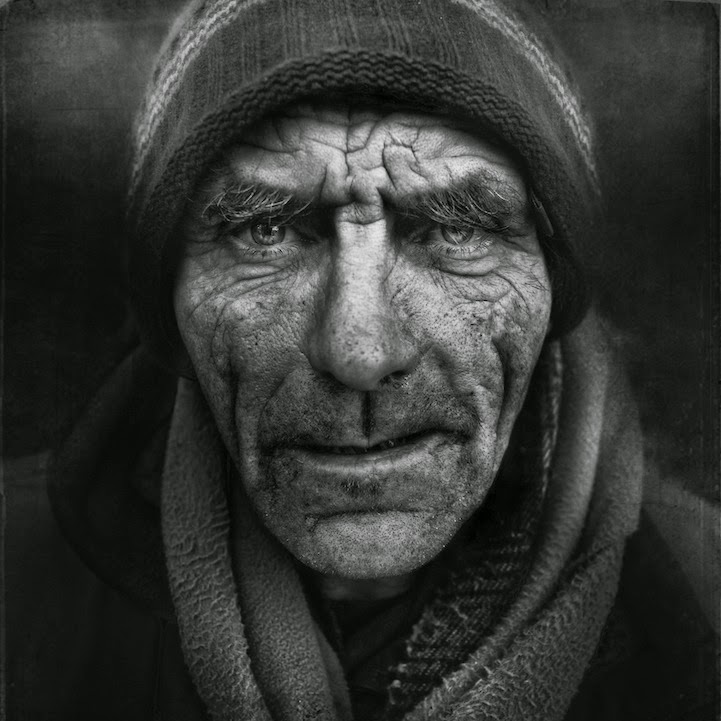

> Experts give their answers (video)!
> Wikipedia article
> Portraits of men and women in Ukraine
To do (in pairs):
- Compare and contrast the two portraits above.
- Using the links above, and other sources you can find, plus your own ideas, define what a portrait is!
- Describe what the difference between a "headshot" and a portrait is.
- Describe what the difference between the snapshot of a person is and a portrait.
- > Which is your favourite "portrait of the month"?
- > Do a self-portrait!
- In ten sentences, do a "Chinese portrait" of yourself, starting each sentence with "If I were..." (for example: "If I were a flower, I would be a rose"). Cf. > Chinese portraits... for inspiration.
08 November 2014
‘The Blood Swept Lands And Seas Of Red’

The field of ceramic poppies at the Tower of London has caught the
public imagination. But does such a beautiful memorial to those killed blind us
to the horror of the First World War?
Contemporary art provokes many responses among the public, but
overwhelming and heartfelt approval is not often among them. However, last week
tens of thousands of people visited an art installation at the Tower of London.
So many, in fact, that buses were diverted and the nearest underground station
closed to avoid dangerous congestion.
The work is made of hundreds of thousands of ceramic poppies planted in
the dry moat of the Tower. Its title is ‘The Blood Swept Lands And Seas Of Red’
and each poppy commemorates a British or colonial serviceman or woman killed in
the First World War. The first of 888,246 flowers was planted on 5th August,
100 years since the first full day of Britain’s involvement in the war. The
last will be installed on Armistice Day, 11th November.
Each poppy was sold online for £25 and the £15million raised will be
divided between six service charities. (After Armistice Day the artwork will be
dismantled and each poppy delivered to its sponsor.)
Not everyone admires it however. Jonathan Jones, the art critic of the
Guardian newspaper, called it a ‘prettified and toothless war memorial. It is
all dignity and grace. There is a fake nobility to it, and this seems to be
what the crowds have come for – to be raised up into a shared reverence for those
heroes turned frozen flowers. What a lie. The first world war was not noble.
War is not noble. A meaningful mass memorial to this horror would not be
dignified or pretty. It would be gory, vile and terrible to see. The moat of
the Tower should be filled with barbed wire and bones. That would mean
something.’
Many object to this view. A writer in the Daily Mail observed that ‘I
saw the poppies back in the summer and wanted to bring my children before the
whole thing disappears. I could think of no better way to impress upon them the
enormity of the Great War than to show them this crimson moat and explain that
every single one of the 888,246 poppies equals a real person who lived and died
for this country.’
Remembering and forgetting
Some think commemorations like this simply disguise the revolting
brutality of war. Dressing it up as some holy, national sacrifice hides the
ignorance, selfishness and stupidity which brought about the unnecessary death
of millions of young people across the world.
On the other hand, many have been deeply moved by this work and feel
conscious of the link it makes to those members of their families who fought,
and some of whom died, in wars over the last century. To remember them in this
way is not to glorify war, but to appreciate what they did to try to ensure
peace for future generations.
The above article was published in THE DAY.
To do (in pairs!):
- Translate into French the above article and list new words and phrases (LEARN THEM!)
- Research what the Tower of London is.
- Send a short comment to either THE DAILY MAIL or THE GUARDIAN expressing your opinion on the installation in the Tower of London (click on the links below the photo above); keep a copy of your message for your ring binder!
- Describe a war memorial that you know and say why you like or dislike it.
- Give a 60-second oral presentation on ONE of the following topics:
- "War memorials should show the horror of war!"
- "War memorials should show that it is sweet and fitting to die for your country."
Subscribe to:
Posts (Atom)