01 May 2019

« LA GUEULE DU METIER » EXPOSITION DE PORTRAITS PHOTOGRAPHIQUES DE Jean-Elie NETTLESHIP

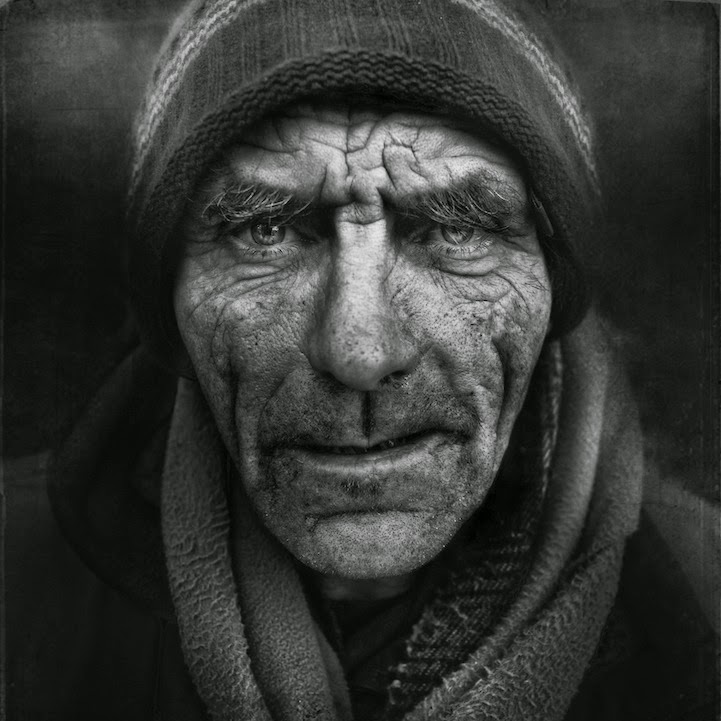
Eric, boulanger

ARTicle : Pourquoi avez-vous intitulé votre exposition « La gueule de l’emploi » ?

Jean-Elie NETTLESHIP: Pour vous inciter à regarder de plus près chaque portrait ! Il faut, vous l’avez compris, chercher les détails révélateurs du métier de chacun: celui-là est costaud et tout pâle, c’est sûrement le boulanger ; celui-là a le cuir dur, c’est sans doute l’ostréiculteur ; celle-ci a le regard inquiet de l’assistante sociale tandis que celui-là nous regardent un peu de haut, c’est évidemment l’ingénieur ; tiens, le vieux a perdu deux doigts, serait-il ancien légionnaire ?

ARTicle : Il est quand même difficile de deviner le job de certains de vos modèles !

: C’est vrai, mais je ne veux pas faire des portraits stéréotypés, style le sérieux docteur au stéthoscope, le cuistot foutraque au faitout fumant, le paysan taciturne sur son tracteur patraque !

ARTicle : Peut-être fallait-il choisir un autre titre alors ?

: Disons que j’aurai dû y ajouter un point d’interrogation : « La gueule du métier ? » Il est vrai qu’un travail, à la longue, a un impact sur le visage et le corps, donc certains détails d’un portrait peuvent en effet évoquer le métier de la personne, mais, pour moi, un bon portrait devrait nous inciter à deviner le caractère de la personne, d’imaginer son passé et son présent dans toute sa complexité. Un bon portrait est comme un miroir : on doit s’y reconnaître, y voir notre humanité commune avec la personne photographiée. Je pense que, par respect pour la personne que je prends en photo, je ne dois pas forcer le trait ; je montre parfois ses outils ou le lieu de travail, mais ce qui compte plus c’est l’expression du visage, les mains, la posture, parce que je veux montrer qui est la personne, pas la personne seulement en tant que « untel » qui pratique tel ou tel métier. Un portrait raconte un peu la vie de la personne, dont le métier n’est qu’une partie. Ce sont avant tout des personnes dont on imagine une vie, une personnalité, une histoire.

ARTicle : Donc, ce n’est pas vraiment une expo sur les métiers ?

: Si, quand même, parce que les modèles ont bien voulu être pris en photo, mais, c’est vrai, en tant que « boulanger » ou « artiste potière », etc. C’est moi, en fait, qui veux que le spectateur face l’effort d’aller au-delà de l’étiquette du métier, qu’il essaye de comprendre, d’imaginer, la vie de la personne, pas que du « boulanger ». 

ARTicle : Certains des modèles n’ont pas l’air très joyeux…

: Vous savez, ils travaillent très dur, ne gagnent pas assez, se sentent isolés voire dévalorisés parfois. Malgré tout, ils sont plutôt fiers d’être ce qu’ils sont dans la vie, même s’ils trouvent que, parfois, leurs métiers sont contraignants. Avec cette expo, je veux aussi questionner nos idées reçues négatives concernant les métiers. Je crois qu’il n’y a pas de sot métier, que nous ne devons pas juger les gens d’après leur métier. Je pense aussi que le travail n’est qu’une partie de la vie des gens.

ARTicle : Cela fait-il de vos photos des œuvres engagées ?

: Je ne sais pas, peut-être. En tout cas, prendre ces personnes en photo m’a fait réfléchir à l’importance que l’on donne au travail dans notre société. 

ARTicle : Le boulot, c’est la santé ?

: C’est moins pire que de ne pas avoir de travail du tout ; le chômage, c’est la mort, on n’existe pas aux yeux des autres. Mais le boulot, c’est quand même galère pour beaucoup de gens, d’autant plus que les gens ont tendance à prendre de haut ceux qui ont un métier manuel ou mal rémunéré.

ARTicle : Vos photos évoquent en quelque sorte les difficultés liées au monde du travail.

: Surement, mais je veux montrer aussi que ces personnes ont, malgré tout, de la dignité, de la fierté, de l’humour, du courage…

ARTicle: C’est plutôt réussi…

: Merci !

Lucie, future architecte

ARTicle : Pourquoi avez-vous choisi le noir et blanc ?

: Parce qu’avec le noir et blanc, ça fait tout de suite plus dramatique qu’avec la couleur ; on s’attend à une histoire (c’est mon but). Et puis, c’est beau, non ?!

ARTicle : Vos photographies sont-elles numériques ou argentiques ?

: Mes photos sont pour la plupart numériques, bien que la manière dont je travaille se rapproche plus de l'argentique. J'essaye un maximum de garder un contact avec la personne en face de moi. J'éteins mon écran pour ne pas couper le contact visuel qui m'unit à mon sujet. L'appareil ne doit pas être une barrière entre nous deux. Je ne prends pas plus d'une dizaine de photos en général et, c'est dans la boîte !

ARTicle : Quelles sont vos inspirations photographiques pour cette exposition ?

: Je me suis inspiré des photos humanistes des premiers photo reporters entre les années 30 et  60 mais aussi du travail de Paolo Pellegrin, particulièrement de sa série "Postcards from America". Cependant, ses photos à lui sont prises sur le vif, nous rendant spectateurs invisibles à l’œil du sujet, tandis que pour mes clichés, le sujet nous regarde, s’expose volontairement et consciemment.

ARTicle : Les personnes que vous avez prises en photo sont-elles satisfaites de leur portrait ?

: Les uns sont intrigués, d’autres plutôt satisfaits de l'image qu'ils renvoient. Certains restent silencieux, ils ne savent pas trop quoi en penser ou peut-être est-ce tout simplement de la pudeur.

L'expo "La gueule du métier" a lieu à l'IADT de Clermont-Ferrand du 17/05/19 au 31/05/19.

28 October 2016

"Post Mortem"... Hellish exhibition by Damien Deroubaix at the "Creux de l'enfer" in Thiers...

For the exhibition web page, click HERE!

The artist and friends...

What are some of the artist's sources of inspiration for this exhibition, entitled "Post Mortem" ("after death")? Here are a few photos and links...


Damien Deroubaix

Damien Deroubaix

Damien Deroubaix

Album cover for a disc by the group Slayer

Damien Deroubaix


Jesus said: "And I say also unto thee, That thou art Peter, and upon this rock I will build my church; and the gates of hell shall not prevail against it..." (Matthew 16:18)


In Islam, God speaks of seven Gates of Hell in the Quran:"And surely, Hell is the promised place for them all.  It has seven gates, for each of these gates is a class of sinners assigned." (Quran 15:43-44). Each gate has an allotted share of the damned who will enter through it.  Each will enter according to his deeds and assigned a level of Hell accordingly.  When the unbelievers are brought to Hell, its gates will open, they will enter it, and stay in it forever: "And those who disbelieved will be driven to Hell in groups until, when they reach it, its gates are opened and its keepers will say, ‘Did there not come to you messengers from yourselves, reciting to you the verses of your Lord and warning you of the meeting of this Day of yours?’  They will say, ‘Yes, but the word (meaning the decree) of punishment has come into effect upon the disbelievers.’" (Quran 39:71). They will be told after admission: "Enter the gates of Hell to abide eternally therein, and wretched is the residence of the arrogant." (Quran 39:72). The gates will be shut and there will be no hope of escape as God says: "But those who reject Our signs, they are the companions of the left hand.  On them will be Fire vaulted over (meaning the gates will be locked)." (Quran 90:19-20)
Ghost train! (Maybe a source of inspiration?!)


Damien Deroubaix


"The Three Ages of Woman" Hans Baldung Grien 

Damien Deroubaix

15 August 2016

Prehistoric land art...


> Wikipedia article on land art: click HERE!

Questions/to do:
  1. Locate White Horse Hill on a map.
  2. When, by whom and why was this horse drawn into the landscape?
  3. Are there other horses or figures drawn into the landscape in Britain?
  4. What is their significance for people throughout the ages and today?
  5. Does similar land art exist where you come from?
  6. What giant figure would you chose to draw, why, and where would you place it?
  7. Sketch your proposal!

11 April 2016

Is this a self-portrait?

Claude Monet (1840- 1926) Coin d’atelier, 1861 Attribution par l’office des biens et intérêts privés, 1950 Paris, musée d’Orsay
Claude Monet: "Coin d'atelier"

> What is an "indirect self-portrait"? Click HERE!

21 February 2016

Do men see art differently from women?

A gender issue...
Claire Tabouret

Read the title, look at the photo, then read the articles using the links above.

Answer the following questions:
  1. What does the photo above show (describe and comment)?
  2. What do you (dis)like about the work of Claire Tabouret?
  3. List the things YOU value in art (its art market value, its intrinsic artistic worth, the intention of the artist, the "message", the aesthetic impact, its decorative potential for your living room, its originality, etc.).
  4. Ask a friend or member of your family who is not the same gender as yourself what value THEY place on art (compare with your own list).

23 October 2015

Rebel with a cause... Gilles Caron, photojournalist (1939-1970)


I) The exhibition (work by yourself):
  1. Go to the Hôtel Fontfreyde exhibition in Clermont-Ferrand.
  2. Take your time looking at the photos, read the panels, and watch the short documentary.
  3. Write a list of your feelings, thoughts, opinions, and knowledge of the period (the '60s).
  4. Think about the way the exhibition curator has decided to display the photos (how the photos have been grouped by themes, the lighting, the frames, the labeling and explanation panels, etc.).
  5. Why and for whom do you think this exhibition has been set up?
  6. Several shots are in both black & white and in Ektachrome; how does this affect the way we perceive the subject?
  7. Choose one photo that "speaks to you" more than the others, write down your detailed description of it (and write down any information about it from the section and object labels).
  8. Present your chosen photo to your classmates, including your thoughts and feelings (what do we learn from the picture about the period, and about what Caron thought of the situation he photographed?).

II) Research (group work):
  1. What is journalism and what is photojournalism?
  2. Who are the greatest photojournalists do you think (include at least five iconic photos by different photojournalists to comment)?
  3. Who was Gilles Caron (find his biography, comments made about him and his photos, as well as comments he made about himself and his work, plus try to imagine what kind of person he was from the photos you saw at the exhibition)?
  4. What was happening in the world in the 60s (Cold War, decolonization, the "Swinging Sixties" and the Nouvelle Vague, the protest mouvements)?
  5. Why were there conflicts (describe them) in, among other places, the Middle East (Israel), the Far East (Vietnam, Cambodia), Europe (Northern Ireland, France), and Africa (Nigeria)?
III) Think and write (alone or in pairs, answer at least one of the questions below; your answers can be as long as you like!):
  1. What impact have the photos of this exhibition had on you?
  2. Describe and comment the photo of Gilles Caron at the top of this blog post.
  3. Do you see yourself as a photojournalist?!
  4. Can a photo change the world?
  5. Describe the different ways Caron "talks about" conflict (i.e. how it affects individuals) through the following photo reports: Six-Day War, Vietnam, Paris, Biafra, Northern Ireland.
  6. What is the role of the State?
  7. Can empires be considered as having done some good for the people whose countries were colonized?
  8. To what extent did Caron's life before 1967 determine his choice of photographic missions after 1967 do you think?
  9. Is Gilles Caron a legendary photojournalist?
  10. Why can Caron be described as a rebel with a cause?
  11. Gilles Caron once said: "Envie de vivre vite. De mourir jeune. Je fous toujours tout en l'air mais pourquoi pas ?" ("Want to live fast. To die young. I always mess things up but why not?"). How much do you approve this attitude, quite prevalent among Caron's generation at the time?
  12. Caron was heroic; do you agree?
  13. Is Caron a victim of the 60s, a time of conflict, or is he partly responsible for its violence?
  14. From the exhibition, we learn about the 60s (conflicts, the individual within society, the abuse of power by States), and about the history of photography and the role of photojournalists; but, what do we learn about ourselves (as individuals, as societies)?
  15. It could be argued that society destroys the individual; should we rebel against it?
  16. What does the photo below say about the ethics of being a photojournalist (are there subjects that should not be photographed or shown; should the photographer be only a witness or should he intervene)?
1968, Raymond Depardon by Gilles Caron

11 January 2015

Political cartoons... How dangerous can they be?!


To do/questions:
  1. Research who Joe Sacco is.
  2. Translate his cartoon and describe the pictures that make up the cartoon published in the Guardian (click on the link above).
  3. What are the events he is reacting to in his cartoon?
  4. Explain what "JE SUIS CHARLIE" means.
  5. What is "satire"?
  6. Summarise the point of view Sacco expresses in his cartoon.
  7. Do you agree with his opinion?
  8. Have a look at the cartoons in the following link: Charlie Hebdo tributes, article in THE DAY
  9. Draw a one-picture cartoon on the theme: "The pen is mightier than the sword".
  10. What is the point of political (also called editorial) cartoons?

To help you understand and think about and discuss the very complex issues involved in the events that took place in Paris in January 2015, click HERE!

25 November 2014

Stick to it!


2014 is European Year against food waste... As an arty activity, design a FRIDGE MAGNET with a splendid slogan and brilliant image on the theme of not wasting food!

Send your entries (on a Word document) to: ortisbateau@gmail.com

Have fun!

23 November 2014

Global warning...

To do:
  1. Describe the work of art in the photo above.
  2. Comment it (what type of art is this?; do you like it?; what, if any, is the artist's "message"?; who are the "leaders" in the title and why should we follow them?; is this political art?; etc.).
  3. Click on the link under the photo and compare your interpretation with the artist's comments of his work.
  4. Define what political art is (research!).
  5. Find three examples of political art (all genres, including literary, graphic, and musical) that you find effective (send your examples as a "comment" to this blog!).
  6. Prepare a 60-second talk on the question: "Should art bother with politics?"

15 November 2014

What is a portrait?!


> Experts give their answers (video)!
> Wikipedia article
> Portraits of men and women in Ukraine

To do (in pairs):
  1. Compare and contrast the two portraits above.
  2. Using the links above, and other sources you can find, plus your own ideas, define what a portrait is!
  3. Describe what the difference between a "headshot" and a portrait is.
  4. Describe what the difference between the snapshot of a person is and a portrait.
  5. > Which is your favourite "portrait of the month"? 
  6. > Do a self-portrait!
  7. In ten sentences, do a "Chinese portrait" of yourself, starting each sentence with "If I were..." (for example: "If I were a flower, I would be a rose"). Cf. > Chinese portraits... for inspiration.

08 November 2014

‘The Blood Swept Lands And Seas Of Red’


The field of ceramic poppies at the Tower of London has caught the public imagination. But does such a beautiful memorial to those killed blind us to the horror of the First World War?

Contemporary art provokes many responses among the public, but overwhelming and heartfelt approval is not often among them. However, last week tens of thousands of people visited an art installation at the Tower of London. So many, in fact, that buses were diverted and the nearest underground station closed to avoid dangerous congestion.

The work is made of hundreds of thousands of ceramic poppies planted in the dry moat of the Tower. Its title is ‘The Blood Swept Lands And Seas Of Red’ and each poppy commemorates a British or colonial serviceman or woman killed in the First World War. The first of 888,246 flowers was planted on 5th August, 100 years since the first full day of Britain’s involvement in the war. The last will be installed on Armistice Day, 11th November.

Each poppy was sold online for £25 and the £15million raised will be divided between six service charities. (After Armistice Day the artwork will be dismantled and each poppy delivered to its sponsor.)

Not everyone admires it however. Jonathan Jones, the art critic of the Guardian newspaper, called it a ‘prettified and toothless war memorial. It is all dignity and grace. There is a fake nobility to it, and this seems to be what the crowds have come for – to be raised up into a shared reverence for those heroes turned frozen flowers. What a lie. The first world war was not noble. War is not noble. A meaningful mass memorial to this horror would not be dignified or pretty. It would be gory, vile and terrible to see. The moat of the Tower should be filled with barbed wire and bones. That would mean something.’

Many object to this view. A writer in the Daily Mail observed that ‘I saw the poppies back in the summer and wanted to bring my children before the whole thing disappears. I could think of no better way to impress upon them the enormity of the Great War than to show them this crimson moat and explain that every single one of the 888,246 poppies equals a real person who lived and died for this country.’

Remembering and forgetting

Some think commemorations like this simply disguise the revolting brutality of war. Dressing it up as some holy, national sacrifice hides the ignorance, selfishness and stupidity which brought about the unnecessary death of millions of young people across the world.

On the other hand, many have been deeply moved by this work and feel conscious of the link it makes to those members of their families who fought, and some of whom died, in wars over the last century. To remember them in this way is not to glorify war, but to appreciate what they did to try to ensure peace for future generations.

The above article was published in THE DAY.

To do (in pairs!):
  1. Translate into French the above article and list new words and phrases (LEARN THEM!)
  2. Research what the Tower of London is.
  3. Send a short comment to either THE DAILY MAIL or THE GUARDIAN expressing your opinion on the installation in the Tower of London (click on the links below the photo above); keep a copy of your message for your ring binder!
  4. Describe a war memorial that you know and say why you like or dislike it.
  5. Give a 60-second oral presentation on ONE of the following topics: